Perhaps, you already know about bentonite clay.
However, have you ever thought about its properties?
How can clay swell up like a sponge after absorbing water?
Also, how can such clay be utilized in so many applications? How can it include drilling mud and kitty litter?
To understand this, you must gain more insight into the composition of bentonite.
This guide explains the same. Using it, I will help you understand bentonite’s unique chemical composition.
We begin our discussion by first defining bentonite.
What is Bentonite?
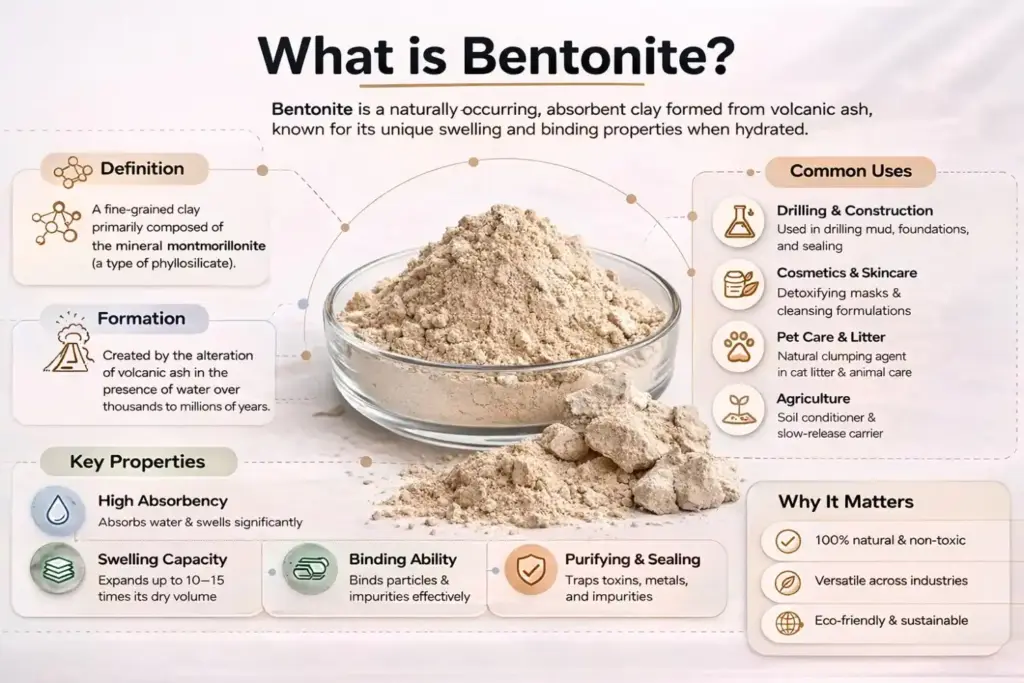
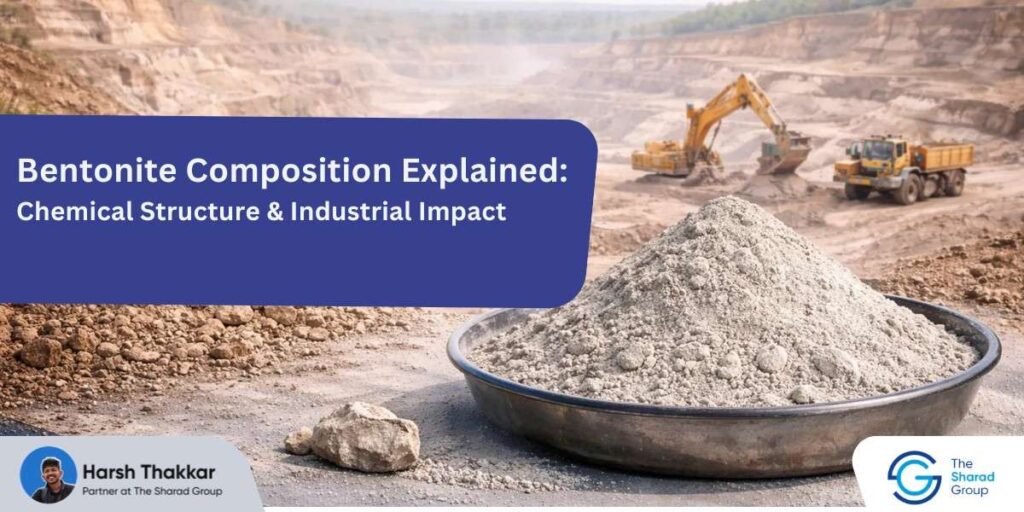
Bentonite is a clay type known for being very soft and easily absorbent.
It is actually formed from volcanic ash. This makes it a part of the smectite group of clays.
Bentonite comes in two major types. These include:
- Sodium Bentonite:
Known for being highly swelling in nature.
- Calcium Bentonite:
Usually has a much lower threshold for swelling.
It is the bentonite clay chemical structure that powers both these types. It is what gives bentonite its versatile industrial benefits as well.
Explaining the Bentonite Chemical Formula
Defining the chemical formula of bentonite is quite tricky.
Why? Because it is a natural material. This makes it develop many different chemical variations.
On average, this is the general formula of bentonite:
(NaCa)₀.₃₃(AlMg)₂(Si₄O₁₀)(OH)₂·nH₂O
Seems a bit confusing? Let’s understand what each element represents:
| Component | What It Represents |
| (NaCa) | Sodium or calcium ions |
| (AlMg) | Aluminum and magnesium |
| (Si₄O₁₀) | Silica tetrahedra |
| (OH)₂ | Hydroxyl groups |
| nH₂O | Variable water molecules |
Chemical Composition of Bentonite
Now, let’s understand the percentage of each of these elements.
Below is bentonite’s typical chemical composition:
| Oxide | Percentage | Role |
| Silica | 55-70% | Main structural component |
| Alumina | 15-25% | Provides stability |
| Iron Oxide | 1-5% | Affects color, lower is better for white products |
| Magnesium | 2-5% | Influences swelling capacity |
| Calcium | 0.5-3% | Higher in calcium bentonite |
| Sodium | 0.5-3% | Higher in sodium bentonite |
| Potassium | 0.1-1% | Minor component |
| Loss on Ignition | 5-10% | Water and organic content |
Why Swelling Occurs in the Bentonite Clay Chemical Structure
So, how does bentonite exactly swell like a sponge?
Mainly, this has to do with its sandwich structure. In any typical bentonite clay molecule, you have:
- Two layers of silica tethrahedra
- One middle layer of alumina octahedra
As water is added to the clay, it gets trapped between these layers.
This makes it swell and store water. It can swell to 15-30 times its dry volume!
On the other hand, calcium bentonite is different.
Its calcium layers are much closer together. This prevents more water from entering and swelling up its structure.
How Bentonite Composition Impacts Industrial Use
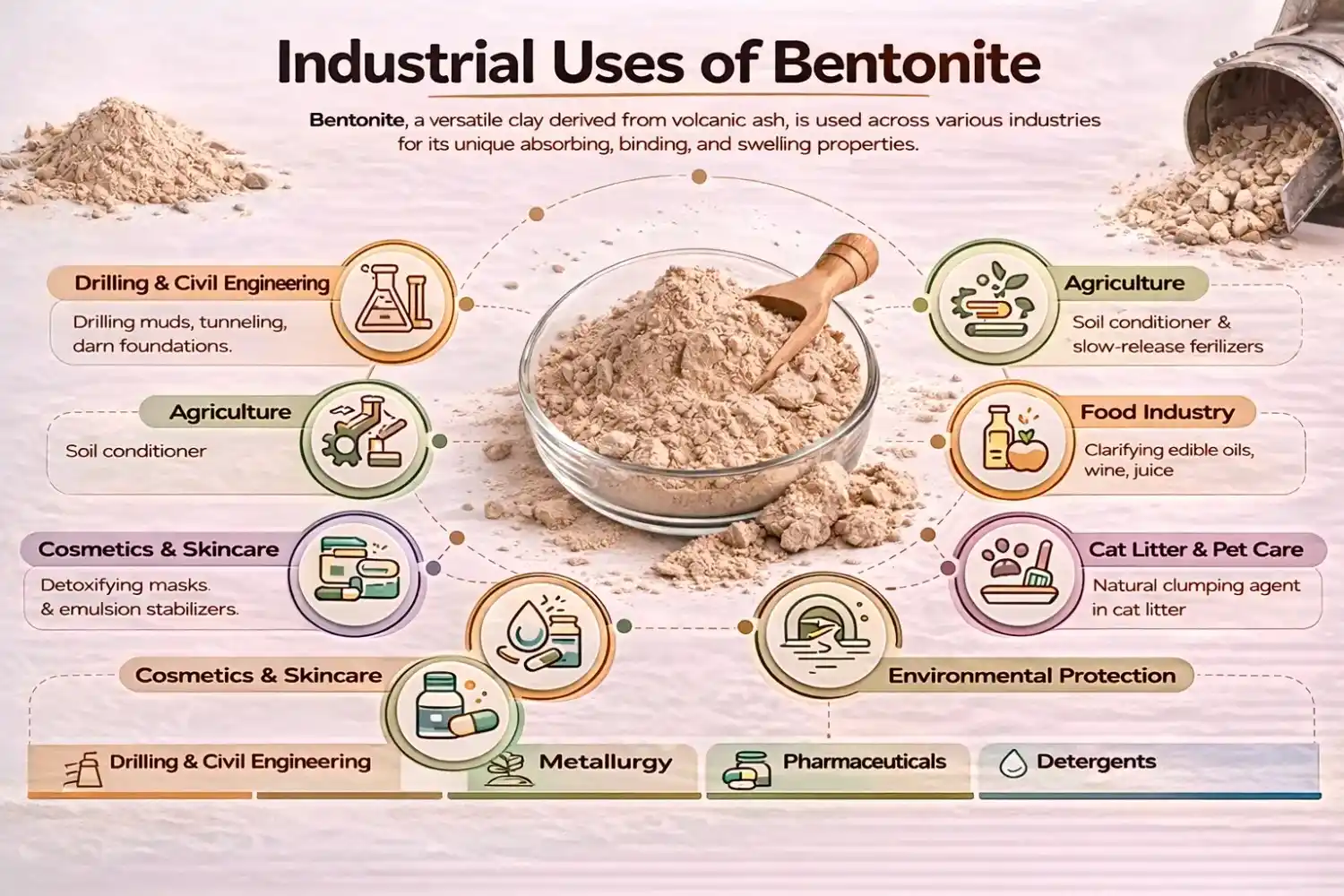
It is the chemical composition of bentonite that gives it its industrial benefits.
Here is how bentonite clay is typically used in such industrial settings:
| Industry | What They Look For |
| Foundry | High green strength, thermal stability |
| Drilling | High swelling, good viscosity |
| Ceramics | Low iron content (whiteness), fine particle size |
| Civil Engineering | High swelling capacity (sodium type) |
| Cosmetics | Purity, fine texture, safety |
Why Purity of Bentonite Clay Matters
Any impurities left within the bentonite mineral composition can affect its performance.
High quartz is one such regular impurity found within bentonite clay. If not removed, it can make the clay too rough.
Another culprit is iron oxide. This darkens the clay’s color. It makes it impossible to use clay for ceramics.
So how can you avoid it?
The best way is to only use trusted bentonite suppliers in India. They provide detailed analysis reports that include:
- Consistency of the bentonite chemical formula
- Indexing of its swelling
- Particle sizes
- Impurity levels
Conclusion
The secret ingredient of bentonite clay’s ability is its chemical composition.
It is this layered bentonite clay’s chemical structure that enables its industrial benefits.
Need some of these benefits for your own manufacturing purposes?
If you prefer high-quality bentonite with reliable support, only choose The Sharad Group.
With multiple decades of global experience, The Sharad Group is one of the best bentonite manufacturers in India. They have rigorous quality testing and ensure every batch has the same level of consistency.
Moreover, their excellent team of experts ensures consistent support even after deliveries.
Partner with The Sharad Group today and gain a supply of industrial minerals you can truly trust!

FAQs
1. What is the basic bentonite composition?
The bentonite composition is primarily made of a clay mineral called montmorillonite. The bentonite mineral composition includes silica (55-70%), alumina (15-25%), and smaller amounts of iron, magnesium, calcium, or sodium.
2. What is the bentonite chemical formula?
The general bentonite chemical formula is (NaCa)₀.₃₃(AlMg)₂(Si₄O₁₀)(OH)₂·nH₂O. This formula shows the layered bentonite clay’s chemical structure, which allows water to enter and cause swelling.
3. How does the chemical composition of bentonite affect its use?
The chemical composition of bentonite determines its swelling ability, color, and strength. High sodium content means high swelling (good for drilling). Low iron content means a whiter color (good for ceramics). Reliable bentonite suppliers test these properties.
4. What’s the difference between sodium and calcium bentonite composition?
The main difference in bentonite composition is the exchangeable ion. Sodium bentonite has more sodium ions, leading to greater swelling. Calcium bentonite has a higher calcium ion content, resulting in lower swelling. Your choice depends on your application.
5. Why should I care about bentonite mineral composition?
The bentonite mineral composition affects how the clay performs in your process. Quality bentonite suppliers provide detailed composition reports so you know exactly what you’re getting.