Look. I’ll tell you something most soil suppliers won’t.
Most buyers cannot tell the difference between a truck of red soil and a truck of laterite. Why would they? Both look reddish. Both feel gritty. The drivers don’t know either. Half the time the loading boys don’t know.
But the soil knows.
I had a Karnataka contractor ring me up at 11 in the night, completely panicked. His blocks weren’t setting. Forty truckloads gone, four lakh down the drain. He had ordered laterite for a coastal job. The vendor sent red soil. Same color, same dust, totally different soil.
He kept asking me, “How was I supposed to know?”
Honestly? You couldn’t, just by looking. That’s the whole point of this guide.
If you’re sourcing soil for any kind of industrial use, the difference between red soil and laterite soil can wreck your project quietly. Or save it. Depends on whether you know what to ask for before the trucks roll out. Let me walk you through it the way I’d explain it sitting across from you with a cup of chai.
Are They the Same Thing? Quick Answer
No. Not even cousins, really.
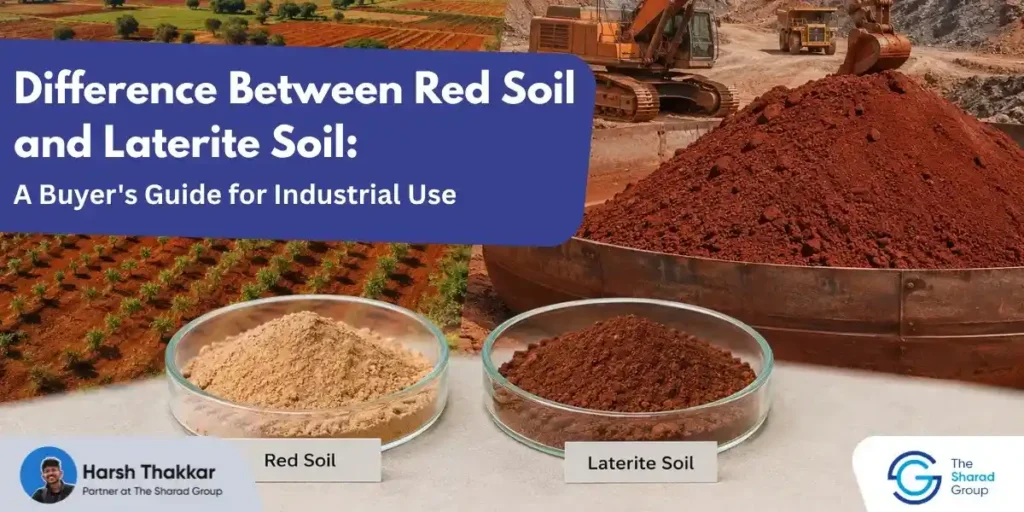
Red soil comes from old crystalline rocks slowly breaking down. The iron in those rocks rusts over centuries. That rust is what gives it the red colour.
Laterite is born differently. Tropical rain hammers a piece of land for thousands of years, washing out almost everything except iron and aluminium. What’s left behind is laterite. Heavy, dense, mineral-rich.
Here’s the part that decides everything for industrial buyers. Red soil stays soft when it dries. Laterite hardens. Like stone. Same sun, completely opposite behaviour. That single quirk is why one ends up in farm fields and the other ends up holding up walls.
Side by Side: Red Soil vs Laterite Soil
If you only have thirty seconds, this table covers most of what you need.
| Property | Red Soil | Laterite Soil |
|---|---|---|
| How It Forms | Slow weathering of granite and gneiss | Heavy leaching during wet and dry tropical cycles |
| Colour | Reddish brown | Brick red, almost rust |
| Texture | Sandy or loamy, loose to the touch | Coarse, gritty, hardens after drying |
| Iron + Aluminium Oxides | Moderate iron, very little aluminium | Loaded with both |
| Hardens on Drying? | No | Yes, sets like stone |
| Fertility | Decent | Pretty poor (rain washed it out) |
| Major Indian Sources | Tamil Nadu, Karnataka, Odisha, MP | Kerala, Konkan coast, Goa, Kutch |
| Industrial Use | Bricks, tiles, basic pottery | Building blocks, cement, ore-grade work |
| Price Range | Lower | Higher (especially ore-grade) |
So What Exactly is Red Soil?
Red soil is what you stand on across half of India.
It’s been there forever. Old crystalline rocks like granite and gneiss kept breaking down, century after century. The iron in them oxidised and stained the whole soil red. That’s it. That’s the story.
Pick up a handful. It feels sandy. Sometimes a bit loamy depending on the region. Drains water reasonably well. Holds enough potash to grow groundnut, millet, pulses, basic stuff. Farmers manage with it.
For industry though, red soil sits at the bottom of the price ladder. It’s fine for fired bricks. Decent for low-end pottery. Useful as a topsoil blender. Nobody is using red soil to build anything load-bearing or precision-grade. It just isn’t built for that.
Where in India You Find It
Around 10 percent of India’s land sits on red soil. Big belts:
- South: Tamil Nadu, southern Karnataka, Andhra Pradesh
- Centre: Eastern MP, Chhattisgarh
- East: Odisha, Jharkhand, parts of Bengal
And it almost never travels far. Trucking red soil 800 km doesn’t make economic sense. So it stays regional, mostly.

Then What Is Laterite Soil?
Laterite is the moody one.
It needs a very specific climate to form. Heavy monsoons. Then long dry stretches. Then more rain. Repeat for thousands of years. The water just keeps washing the soluble bits away. Silica. Calcium. Magnesium. All of it, gone. What remains is a stubborn cake of iron and aluminium.
And here’s the wild bit about laterite soil. Cut blocks of it while it’s still moist underground, drag the blocks out, leave them in the sun for a couple of days, and they harden. I mean really harden. Like stone.
There’s a 400-year-old Goan church standing on laterite blocks right now. So is a chunk of Angkor Wat in Cambodia. That’s not magic, that’s just iron and aluminium oxide bonding tight when moisture leaves. But the result is genuinely impressive.
Where Laterite Comes From in India
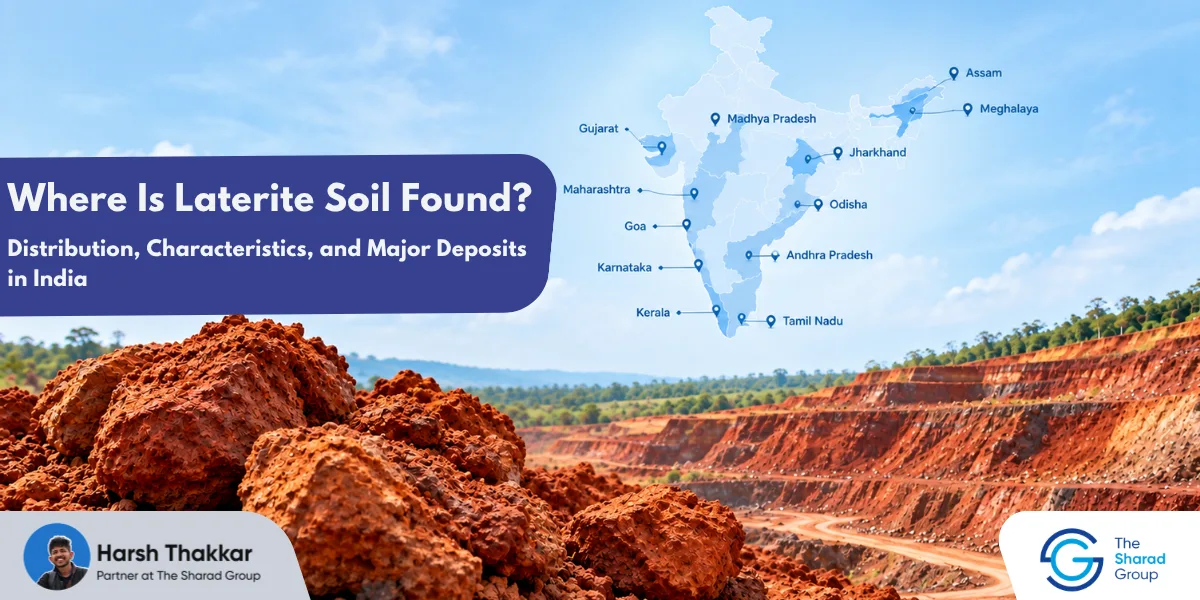
Laterite is fussy. The climate has to be right. So you find it in:
- Kerala and the Konkan coast
- Coastal Karnataka, Goa
- The Western Ghats stretch
- Pockets across Odisha and the Northeast
- Gujarat, especially the Kutch belt
If you’re an exporter, listen carefully. Kutch laterite has a real edge. Three big ports within driving distance, Kandla, Mundra, Tuna. That’s the difference between bulk shipping making sense and bulk shipping eating your margin.
Why This One Distinction Decides Project Outcomes
Back to that Karnataka contractor for a second.
His four lakh loss wasn’t even the full damage. He lost three weeks. He lost the trust of his client. Two other vendors who were waiting on his timeline had to be paid extra. By the time he finished doing the math, the actual material cost was the smallest piece of the puzzle.
All of that, because someone confused two soils that look the same.
Three things flip the moment you swap one for the other:
- Hardening Behaviour. Laterite sets when dried. Red soil never does. If your job depends on cut blocks holding shape, this single property is the entire game.
- Mineral Concentration. Laterite carries a lot more iron and aluminium oxide. That’s why it ends up in cement work, certain pigment manufacturing, and even bauxite-grade ore extraction. Red soil isn’t even in that conversation.
- Pricing and Freight Sense. Red soil is cheap and local. Laterite, especially ore-grade, can justify long freight runs because the buyers are scattered globally. Port proximity matters in ways red soil never demands.
Where Each Soil Earns Its Money
Red Soil: Common Uses
- Traditional fired clay bricks
- Low-grade pottery and earthenware
- Landscaping mixes and topsoil blending
- Agricultural use after proper amendments
Laterite Soil: Common Uses
- Cut laterite blocks for wall construction
- Aggregate and additive in cement and concrete work
- Iron ore and bauxite (aluminium) feedstock for select grades
- Road sub-base in tropical regions
- Red ochre and pigment manufacturing
If you’re working on ceramics, sanitaryware, or precision tile production, neither of these soils is right for you. Those industries run on processed clays. Different beast altogether.
For that side of things, the comparison of ball clay vs kaolin covers the territory better than this guide can.
Red Soil, Yellow Soil, and Laterite Are Not Interchangeable
Buyers throw all three terms around like they mean the same thing. They don’t.
| Soil | What Gives It Colour | Buyer Takeaway |
|---|---|---|
| Red Soil | Iron oxide | Low cost, basic brick and tile use |
| Yellow Soil | Hydrated iron oxide | Cousin of red soil. Same family, just held more moisture |
| Laterite | Iron and aluminium oxides combined | Industrial-grade. Hardens when dry. Exportable. |
Yellow soil and red soil basically share a story. Same chemistry. Just yellow soil sat in wetter conditions while it formed.
Laterite has its own thing going on. Different formation. Different price. Different buyers.
If you want to dig deeper on how soil texture actually plays out for industrial buyers, the breakdown of characteristics of clay soil is worth the read.
What Smart Buyers Always Verify Before Sourcing
A few small checks. They’ve saved more procurement teams than I can count.
- Region of Origin. Confirms you’re getting the soil you actually paid for.
- Iron and Aluminium Oxide Percentages right there in the test report.
- Moisture and Hardening Behaviour. The dry-in-sun test from 200 years ago still works. Just leave a moist sample out for a few hours.
- Particle Size and Gradation, which matters a lot for cement and block work.
- Port Distance and Freight Costs. Critical if you’re shipping international through Kandla or Mundra.
Buyers who skip the field test almost always pay for it later. The test takes maybe two hours. A wrong shipment? That can take weeks to undo.
The Bottom Line for Your Next Order
Red soil and laterite live in two completely different worlds.
Red soil belongs in basic earthwork. Bricks. Tiles. Topsoil. Simple stuff that doesn’t need precision.
Laterite is industrial. It belongs in construction blocks, cement mixes, ore extraction, and the export pipeline. Mixing them up is where most buyer headaches start, and it’s almost always a costly headache.
If you’re sourcing laterite or any industrial soil at scale, work with a supplier who actually mines and processes the material. Not a trader who just resells what they bought yesterday.
That’s where The Sharad Group fits in.
Six decades plus of mining experience in the mineral-rich Kutch region of Gujarat. Vertical integration, so we control quality from the mine all the way to your shipment. Three port access keeping our freight competitive for international buyers.
Reach out to The Sharad Group when you’re ready to talk through your laterite or industrial soil requirements. Our team will help you source it right the first time, not the third time.

FAQs
1. What Is the Main Difference Between Red Soil and Laterite Soil?
Red soil comes from rocks weathering slowly over time. It stays loose, drains okay, and supports moderate farming. Laterite forms differently, getting leached by tropical rainfall for thousands of years until almost nothing is left except iron and aluminium. The big practical thing? Laterite hardens like stone when it dries. Red soil never does. That single behaviour decides which one ends up in walls and which ends up in farm fields.
2. Why Does Laterite Harden When Dried?
Iron and aluminium oxides bond very tightly the moment water leaves the soil. That’s it. That’s the whole secret. It’s the same property that lets coastal Indian construction use laterite blocks for centuries without them falling apart. Cut while moist, dry in the sun, and you basically have stone.
3. Can Both Soils Be Used in Construction?
Yes, but for very different jobs. Red soil mainly makes its way into bricks and tiles. Laterite goes into cut blocks for walls, road sub-base, and cement work. Ore-grade laterite even feeds into iron and aluminium extraction. So both are construction-relevant, just at different points of the chain.
4. Is Red Soil and Laterite Soil the Same?
No, they aren’t. Both can look reddish in a sample bag, but the formation, the mineral content, and the way each one behaves when dried are completely different. Treating them as the same is one of the most expensive mistakes a buyer can make.
5. Is Laterite Available for Export From India?
Very much yes. India is a major laterite source globally. Supply from Gujarat’s Kutch belt is especially export-friendly because the ports of Kandla, Mundra, and Tuna are right there. Bulk shipping costs stay reasonable that way.