Kaolin clay is one of the most widely used raw materials in the paper, ceramics, and water industries.
But one of the most underrated uses of Kaolin clay is wastewater treatment.
For example, did you know kaolin clay (or China clay) removes up to 99% of textile dyes from wastewater?
So, whether you’ve heard about kaolin’s water purification powers but aren’t sure how it works, you’ve come to just the right place!
In this blog, I’ll walk you through exactly how this miracle mineral tackles industrial pollutants.
With its unique chemical properties and cost-effective wastewater treatment process, kaolin china clay outperforms pricier alternatives.
Let me show you why industries worldwide rely on it for heavy metal removal, dye filtration, and sustainable water treatment.
Kaolin Clay in Wastewater Treatment: Table of Contents
- What is Kaolin Clay?
- Why is Kaolin Used to Treat Wastewater?
- How is Kaolin Clay Used to Treat Wastewater?
- Kaolin vs. Other Wastewater Treatment Materials
- Get Pure-Grade Kaolin Clay for Your Wastewater Treatment Process
- Kaolin Clay in Wastewater Treatment: FAQs
What is Kaolin Clay?
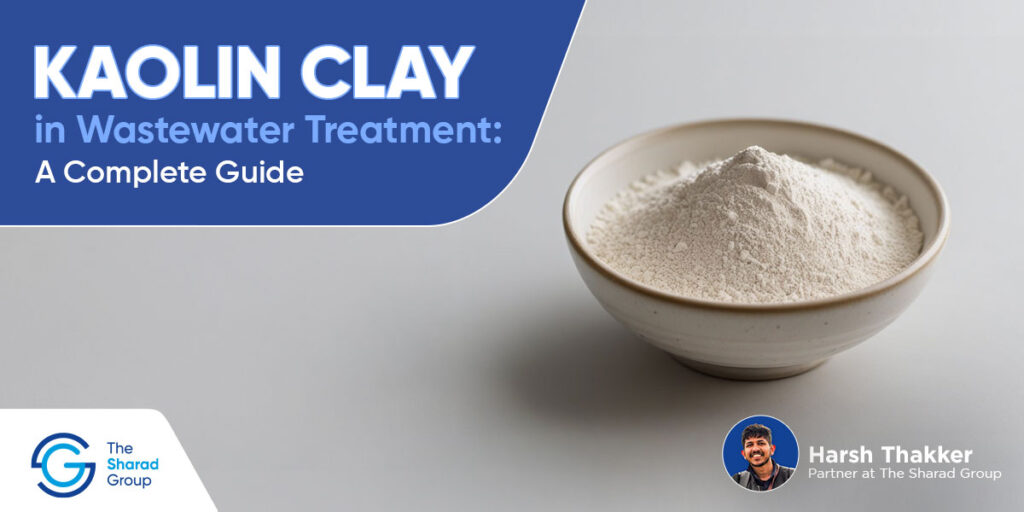
Kaolin clay, also widely known as “China clay,” is a naturally soft, white mineral that is mined from naturally kaolinite-rich rocks.
It’s particularly known for its resistance to heat, brightness, and consistently smooth texture.
The name “Kaolin Clay” traces back to “Kao-ling,” a Chinese hill where it was first mined for porcelain centuries ago.
Chemically, it’s represented as Al₂Si₂O₅(OH)₄, which means it is a blend of aluminium, silicon, and oxygen.
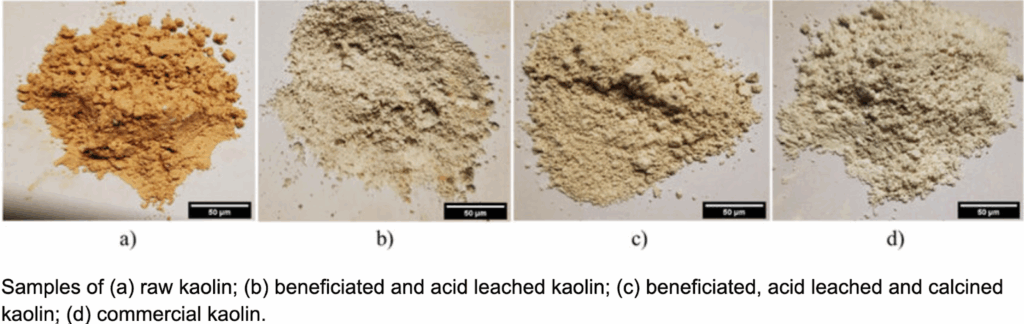
Let me quickly tell you how Kaolin is formed:
Over millions of years, natural weathering (rain, heat, and earthquakes) breaks down harder minerals (like feldspar), leaving behind these fine, powdery deposits.
The natural process ensures both abundance and pure quality of Kaolin Vlay.
Modern industries value kaolin for its purity and diverse applications, especially in wastewater treatment.
Let me show you how its unique structure enables it to trap impurities efficiently.
Why is Kaolin Used to Treat Wastewater?
The primary reason refined Kaolin clay is used to treat wastewater is due to its unique chemical properties.
A combination of its physical, chemical, and thermodynamic properties makes it one of the most effective and affordable wastewater treatment filters.
Here’s how they work:
1. High Adsorption Capacity
First, Kaolin has a layered silicate structure: its particles have a large surface area, which allows it to trap heavy metals, dyes, and organic pollutants.
Simply put, Kaolin’s negatively charged surface makes it a natural “magnet” for positively charged industrial impurities, such as lead, cadmium, and methylene blue.
And it does so without dissolving in water like other chemicals!
2. Chemical Stability
Unlike synthetic adsorbents, kaolin is chemically inert.
So, it doesn’t react with water or degrade under varying pH levels.
This stability is critical in ensuring consistent performance in harsh industrial wastewater conditions without releasing harmful byproducts.
3. Non-Swelling Structure
Kaolin’s tightly bound layers resist water absorption, which prevents unwanted expansion of chemical particles.
This non-swelling property is critical in filtration systems, where clay must maintain structural integrity under prolonged exposure to moisture.
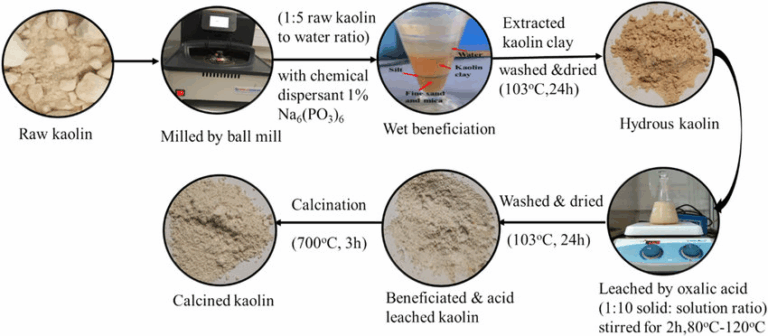
4. Cost-Effectiveness & Eco-Friendliness
Kaolin isn’t just great at doing its job as a raw material for water filtration.
It is a low-cost alternative to activated carbon or ion-exchange resins because it is mined in abundance and requires minimal processing.
It’s also non-toxic and reusable, enabling you to achieve sustainable wastewater management goals with minimal investment.
5. Thermal & Mechanical Durability
Another great advantage of kaolin is that it retains its adsorptive properties even at high temperatures. This makes it one of the best options for treating wastewater mixed with hot industrial effluents.
It’s all down to Kaolin’s fine particle size (between 0.1–10 µm), which enhances filtration efficiency without clogging up water systems.
So, if you’re looking for a reliable raw material to treat industrial wastewater, kaolin’s adsorption power, stability, and affordability make it a standout choice.
At the Sharad Group, we’ve often partnered with clients from industries like textiles and mining who use it to meet compliance standards while cutting costs.
How is Kaolin Clay Used to Treat Wastewater?
Now that we’ve looked at why Kaolin Clay is one of the most popular wastewater treatment materials, let me show you how it’s used in treatment processes:
If you want to compare kaolin with another mineral-based treatment option, this article on bentonite clay in water purification explains how adsorption and contaminant removal differ in practice.
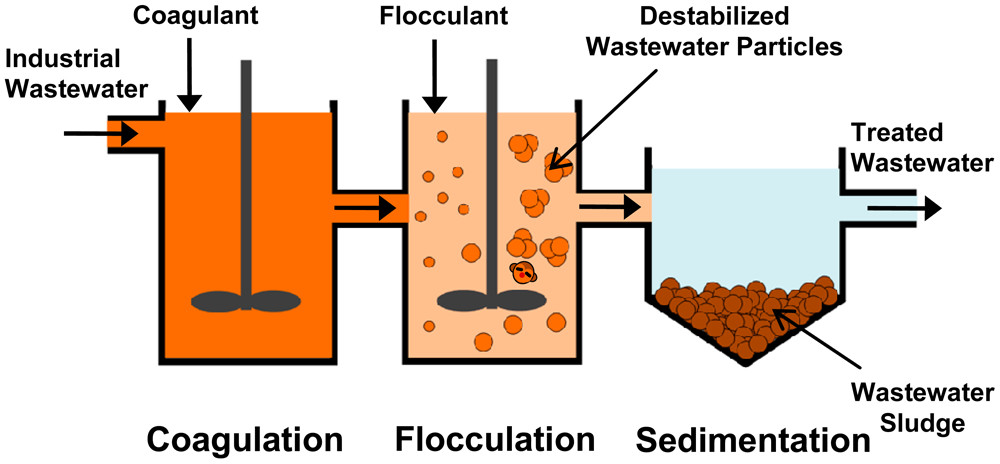
1. Coagulation-Flocculation: Clumping for Cleaner Water
The coagulation-flocculation system is one of the most widely used systems processes that employs Kaolin clay to filter wastewater.
It uses kaolin clay to turn tiny, invisible pollutants into removable chunks. Here’s how it works:
What Are Coagulants?
Coagulants are “sticky chemicals” (like alum or ferric chloride) added to wastewater.
Their job is to neutralize the electric charges on pollutants and make them stick or clump together.
What Are Flocs?
Flocs are “dirt snowflakes,” or fluffy clumps formed when coagulants bind pollutants together.
Here’s where Kaolin Clay comes into the picture:
It acts as a weighted scaffold, helping flocs grow larger. As a result, the sedimentation process becomes much faster because heavier flocs sink faster.
Step-by-Step Process
- Mixing: Coagulants + kaolin are stirred into the wastewater.
- Clumping: Pollutants (like chromium or sludge) stick to kaolin, forming flocs.
- Settling: Flocs sink to the tank’s bottom within minutes (vs. hours for untreated waste).
- Filtration: Clear water is drained from the top; sludge is scraped away.
For example, tanneries use the coagulation-flocculation process to treat its effluent-heavy wastewater.
They add kaolin-alum mixes to wastewater. Within as little as 30 minutes, the chromium flocs sink, leaving the wastewater safe for discharge!
2. Composite Materials: Supercharging Kaolin’s Power
While the method we’ve discussed above uses raw kaolin to treat wastewater, scientists have also developed a turbocharged version by blending it with other materials.
It is used in a completely different way for completely different types of wastewater.
Let me quickly show you how they work and how you can use them:
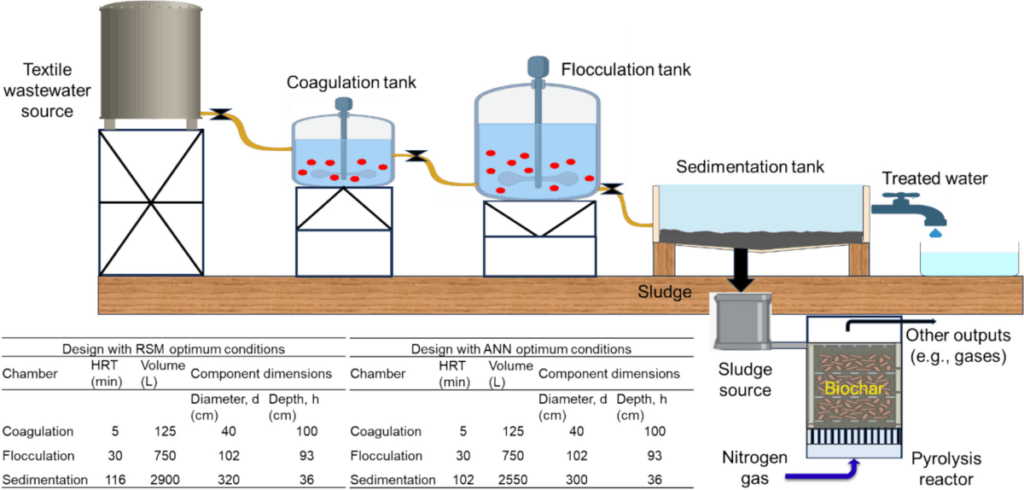
Kaolin-Biochar: The Dye Destroyer
Biochar, a product of plant waste, adds extra pores to kaolin, creating a “microscopic net” that catches dye molecules!
This “Dye Destroyer” is widely used in the textile industry as it removes 99% of textile dyes from wastewater (like reactive blue) in one pass!
It’s your ideal solution if you’re running a fabric mill and face strict color discharge limits.
Magnetic Kaolin: The Reusable Filter
Scientists have also used iron oxide nanoparticles to coat kaolin, making it responsive to magnets. This makes it a literal magnet to attract heavy metals found in industrial wastewater.
Its big advantage is that after absorbing heavy metals, magnets pull out the clay, so you don’t have to face the expenses of replacing high-cost filters.
Acid-Activated Kaolin: The Pesticide Buster
Another popular method is to use acid-activated Kaolin to clean agricultural wastewater of its pesticide-related impurities.
How it works: A mild acid wash creates more binding sites on kaolin’s surface. This increases its absorption capacity and works really well in areas where water has to be released straight into the soil or public water bodies.
It is the ideal solution for trapping farm runoff chemicals (atrazine, glyphosate) that resist normal filtration.
As you can see, these Kaolin-powered composites solve specific wastewater challenges while keeping costs low!
Also Read: 7 Benefits of Kaolin Clay
Kaolin vs Other Wastewater Treatments: Why Industries Choose Clay
While you can use different materials to treat wastewater, I strongly believe that kaolin stands out for its balance of performance and cost.
Let me show you how it compares with Bentonite, Carbon, and Synthetic Resins.
1. Kaolin vs Bentonite Clay
| Feature | Kaolin Clay | Bentonite Clay |
| Cost | Lower (₹5–10/kg) | Higher (₹15–25/kg) |
| Swelling | Non-swelling | Expands in water |
| Thermal Stability | Stable up to 500°C | Cracks above 200°C |
| Dye Removal | 85–90% efficiency | 70–80% efficiency |
Best for: Kaolin wins for hot effluents (e.g., textile dyeing) where bentonite’s swelling clogs filters.
2. Kaolin vs Activated Carbon
| Feature | Kaolin Clay | Activated Carbon |
| Absorption | Targets metals/dyes | Broader pollutant range |
| Cost | ₹5–10/kg | ₹200–500/kg |
| Reusability | 5–7 cycles | 2–3 cycles |
Best for: Kaolin cuts costs for heavy metal removal; carbon is highly suited to complex organics, but costs a lot more!
3. Kaolin vs Synthetic Resins
| Feature | Kaolin Clay | Synthetic Resins |
| Eco-Friendliness | Natural, non-toxic | Chemical Byproducts |
| Maintenance | ₹5–10/kg | ₹200–500/kg |
| Reusability | 5–7 cycles | 2–3 cycles |
Best for: Kaolin aligns with sustainability goals; resins excel in ultra-pure water needs.
Final Verdict: As you can see, Kaolin delivers 80% of results at 20% of the cost and works well for most industrial applications.
Get Pure-Grade Kaolin Clay for Your Wastewater Treatment Process
Kaolin clay’s unmatched adsorption, cost-efficiency, and eco-friendliness make it the ideal wastewater treatment solution for industries worldwide.
We, the Sharad Group, have been one of the most trusted kaolin clay suppliers in India since 1960.
We specialize in mining, refining, and supplying high-purity China clay from Gujarat’s rich deposits and processed with cutting-edge technology.
So, whether you need raw kaolin or advanced composites, our quality-controlled supply meets global standards.
Contact us today to source reliable, sustainable kaolin clay for your wastewater treatment needs!
Kaolin Clay in Wastewater Treatment: FAQs
1. How does kaolin china clay actually clean wastewater?
Kaolin clay cleans wastewater by working like a natural magnet for impurities! The chemical properties of kaolin (that negative charge we mentioned) attract and trap pollutants. From my experience, it’s particularly great at grabbing heavy metals and dyes without any fancy chemicals.
2. Is kaolin better than activated carbon for wastewater treatment?
From what I’ve seen, kaolin gives you 80% of the results at 20% of the cost. While carbon has broader uses, our clients in textiles and mining prefer kaolin china clay for heavy metal removal because it’s cheaper and reusable.
3. What makes kaolin so special for industrial wastewater treatment?
In my opinion, three chemical properties of Kaolin make it special for industrial wastewater treatment:
- Its unique layered structure acts as a net for waste in industrial water.
- It doesn’t swell or break down like other clays.
- It works even in hot wastewater, making it perfect for factories.
4. Can kaolin really remove 99% of textile dyes?
Absolutely! In our work with fabric mills, the kaolin-biochar combo creates what I like to call a “microscopic net” that catches dye molecules. When properly used in the wastewater treatment process, yes, 99% removal is definitely achievable.
5. Why should I choose The Sharad Group for my china clay supply?
Having supplied kaolin since 1960, we’ve seen every wastewater challenge. What sets us apart is our quality-controlled mining in Gujarat and our ability to customize, whether you need raw kaolin or advanced composites for specific industrial uses. Plus, we use a tried-and-tested supply chain that’ll ensure that your high-grade Kaolin supply arrives on time, every time!