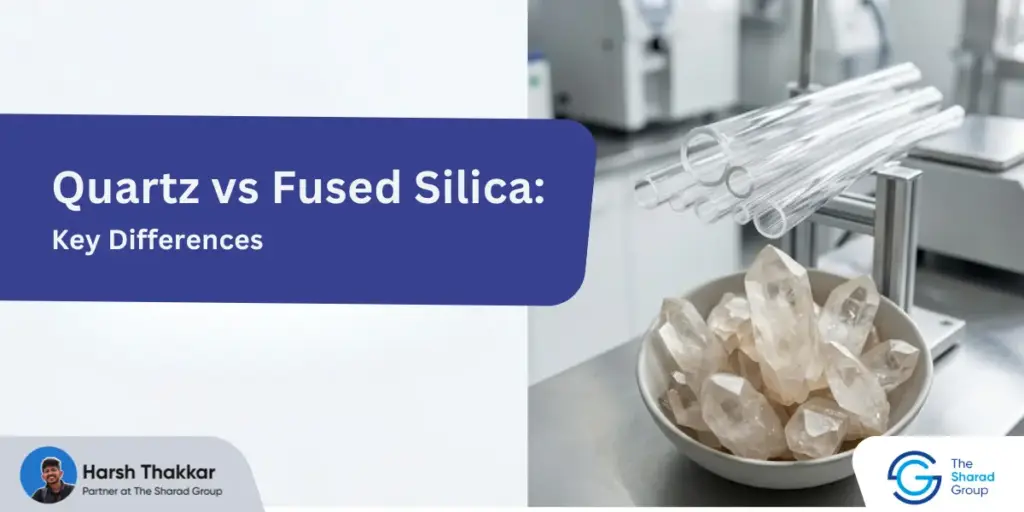
Ever shopped for industrial materials?
Then you are probably aware of quartz and fused silica.
These minerals are quite similar in appearance. Both are used for similar purposes. These purposes include applications at high temperatures.
However, in terms of actual differences, quartz and fused silica are quite different. Both in terms of chemistry and physics.
To help you choose the right mineral, I have created this guide.
Let’s start by first understanding what exactly these minerals represent.
What is Natural Quartz?
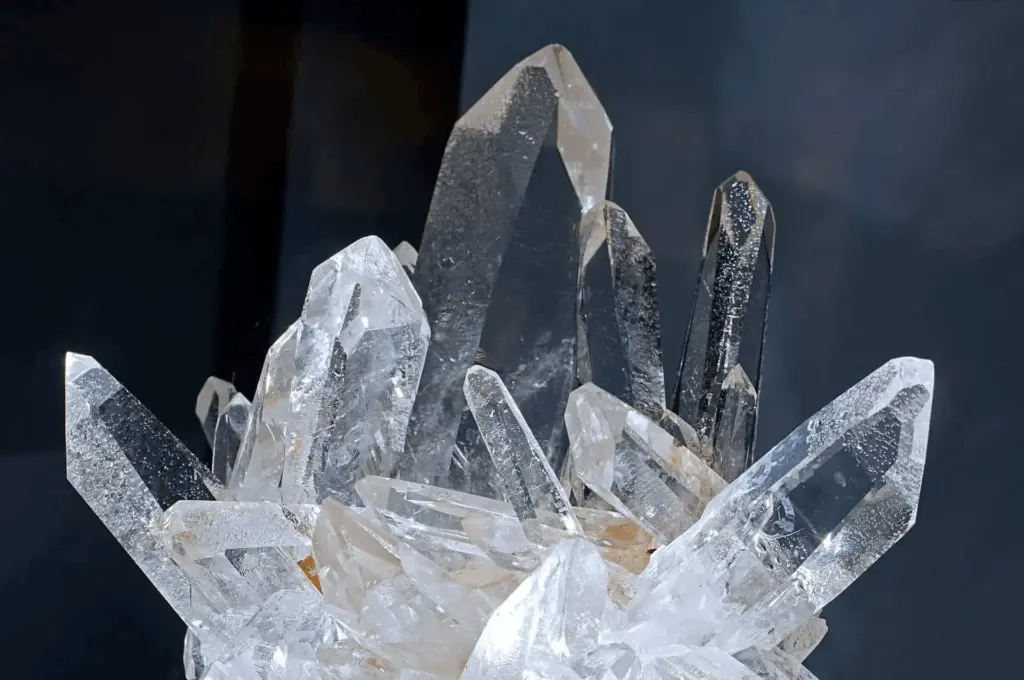
It is essential to know what quartz is before we proceed with our comparison.
Natural quartz is made up of crystals. It forms when molten silica cools slowly over millions of years.
It is normal for suppliers of quartz to offer different types of quartz in their products. This ranges from crystals to powdered quartz.
Natural quartz has been significant in different processes over the years. This ranges from the jewelry and electronics industry to other manufacturing processes worldwide.
Here are the main characteristics of natural quartz stone:
- Has a crystalline structure with neatly arranged atoms
- It is a naturally occurring mineral
- Usually contains impurities such as aluminum and iron
- Can split light into two rays
What is Fused Silica?
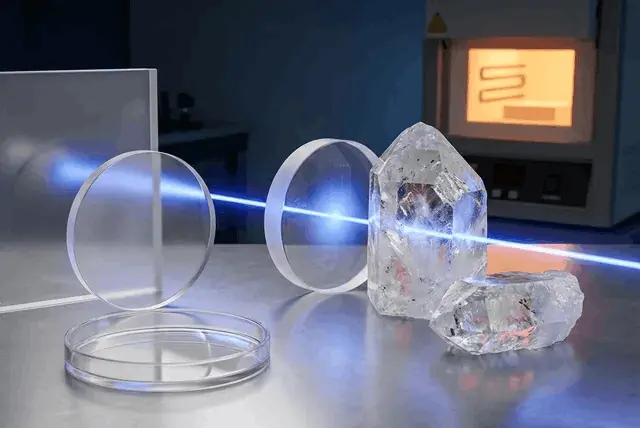
Fused silica is quite different from natural quartz.
It is not natural; it is man-made.
Moreover, it is made by heating silica sand to 2000°C. When it reaches this temperature, it is immediately cooled down.
This prevents any crystallization from happening to fused silica.
Some of the key characteristics of fused silica are:
- Non-crystalline structure
- Completely man-made through melting and rapid cooling
- Incredibly high-purity
- Cannot split light rays

Quartz vs Fused Silica: Direct Comparison
Let’s compare the main differences between these two minerals:
| Property | Natural Quartz | Fused Silica |
| Structure | Crystalline (ordered atoms) | Amorphous (random atoms) |
| Purity | 99.5-99.9% SiO₂ (with impurities) | 99.99%+ SiO₂ (ultra-pure) |
| Melting Point | 1650°C | 1600-1650°C |
| Thermal Expansion | Higher (expands more with heat) | Very low (resists thermal shock) |
| Optical Properties | Birefringent (splits light) | Uniform light transmission |
| UV Transmission | Limited | Excellent |
| Cost | Generally lower | Generally higher |
| Availability | Widely available from quartz suppliers | Specialized production |
Key Differences between Quartz and Fused Silica
Here is a more detailed look at the main differences between these two minerals:
1. Structure
The primary difference between quartz and fused silica is found in their atomic structures.
While natural quartz has an organized crystal structure, fused silica has a random structure.
It is this difference that affects everything related to their properties.
For example, the organized structure of quartz allows it to expand more when heated. In comparison, fused silica is very resistant to this expansion due to its random structure.
With this lack of expansion, fused silica is more resistant to thermal shock. It can be heated and then plunged directly into cold water without facing any cracking.
2. Purity Levels
Natural quartz is known for being an impure mineral. It usually has some leftover metal impurities.
Such impurities can affect natural quartz’s:
- Color
- Transparency
- Electrical conductivity
On the other hand, fused silica is known for its high purity.
This is mainly because it is made directly from silica sand. It allows fused silica to reach 99.9% purity.
3. Optical Performance
Are you dealing with light? Then you need to have a deeper understanding of birefringence.
Birefringence is the ability of something to split light into two rays. It can be both useful and detrimental, depending on your optical needs.
Unlike quartz, fused silica has no birefringence. This is why it is used to make high-end optical devices such as lasers.
It is also useful in UV devices because it transmits UV rays.
Common Applications: Quartz vs Fused Silica
Here are the main applications of each of these minerals:
| Application | Preferred Material | Reason |
| Watches & Electronics | Natural Quartz | Uses the piezoelectric property |
| Semiconductors | Fused Silica | Ultra-high purity, thermal stability |
| Laboratory Glassware | Fused Silica | Thermal shock resistance |
| Optics & Lenses | Fused Silica | Uniform light transmission, UV capability |
| Countertops | Natural Quartz | Aesthetics, cost, availability |
| Fiber Optics | Fused Silica | Purity, light transmission |

Conclusion
So, in the debate between quartz vs fused silica, who wins?
My research shows that it largely depends on your specific application.
Natural quartz is a valuable mineral for electronic and decorative applications. It is also cheaper.
Meanwhile, fused silica is incredibly pure and offers better thermal resistance and optical performance.
The difference between quartz and fused silica comes down to its usage. Both have unique properties that can benefit you if used correctly.
The next step is to find a reliable source for your minerals.
Thankfully, this choice is much easier.
Simply partner with The Sharad Group to receive high-quality industrial minerals. They have decades of experience in serving global industries and their customers’ needs.
Whether it’s quartz or fused silica, The Sharad Group is always ready to serve you. Their experts are committed to providing consistent quality and expert guidance.
Partner with The Sharad Group today and receive high-quality minerals alongside expert support.
FAQs
1. What is the main difference between quartz and fused silica?
The key difference between quartz and fused silica is their structure. Natural quartz has a crystalline atomic structure, while fused silica is amorphous (non-crystalline). This affects thermal expansion, optical properties, and purity levels.
2. Which is better for high-temperature applications, quartz or fused silica?
For high-temperature applications requiring thermal shock resistance, fused silica is the better choice. Unlike natural quartz, fused silica can withstand rapid temperature changes without cracking, making it ideal for laboratory glassware and semiconductor processing.
3. Why is fused silica more expensive than natural quartz?
Fused silica costs more because it requires specialized manufacturing—melting high-purity silica sand at extreme temperatures (around 2000°C) followed by rapid cooling. Additionally, trusted silica sand suppliers provide the ultra-pure raw material needed for premium fused silica production.
4. Can I use quartz instead of fused silica for optical applications?
It depends. Natural quartz exhibits birefringence (splits light), while fused silica offers uniform light transmission. For precision optics, lasers, or UV applications, fused silica is preferred. For less demanding uses, reputable quartz suppliers can provide suitable natural quartz options.
5. How do I choose between quartz and fused silica for my project?
Consider your application requirements. Natural quartz from reliable quartz suppliers works well for electronics, countertops, and general uses. Choose fused silica when you need ultra-high purity, thermal shock resistance, or superior optical performance. The quartz vs fused silica decision ultimately depends on your specific needs.