
Have you ever seen the red earth while driving through the Western Ghats or Karnataka in India?
That is laterite soil. It is an incredibly fascinating material that continues to evolve Indian construction.
Why is it named laterite? It comes from the Latin word “later”, which literally means “brick”. This is because laterite soil has the unique ability to form strong bricks used for building.
In India, laterite soil covers massive stretches of land. It plays an important role in supporting both agriculture and construction.
Let’s dive deeper and understand exactly how laterite soil achieves this.
What is Laterite Soil? How Is It Made?

To understand what laterite soil is, you need to know how it forms.
Laterite soil forms under high temperatures and heavy rainfall. It is these two elements that make a process called “laterization”.
During the monsoon season, rainwater seeps into the ground. This rainwater contains soluble minerals such as silica and magnesium.
As the dry season approaches, the solutions rise back to the surface due to evaporation. But the insoluble compounds are still left behind.
After thousands of years, this process creates soil rich in residue. This soil is red in color and is called laterite soil or laterite clay.
It is actually the iron oxide in this soil that rusts, giving the soil its trademark red color.
What is Laterite Soil Made Of?
Iron is not the only component of laterite soil. The laterite soil composition actually carries a host of ingredients.
These include the following:
| Component | Typical Proportion | Role in Soil Properties |
| Iron Oxide | 30-50% | Gives the red color, contributes to hardening |
| Aluminum Oxide | 20-30% | Provides strength and stability |
| Silica | 5-30% | Remaining from the parent rock |
| Titanium Oxide | 1-5% | Minor component |
| Kaolinite Clay | Variable | Affects plasticity |
Where Can You Find Laterite Soil in India?

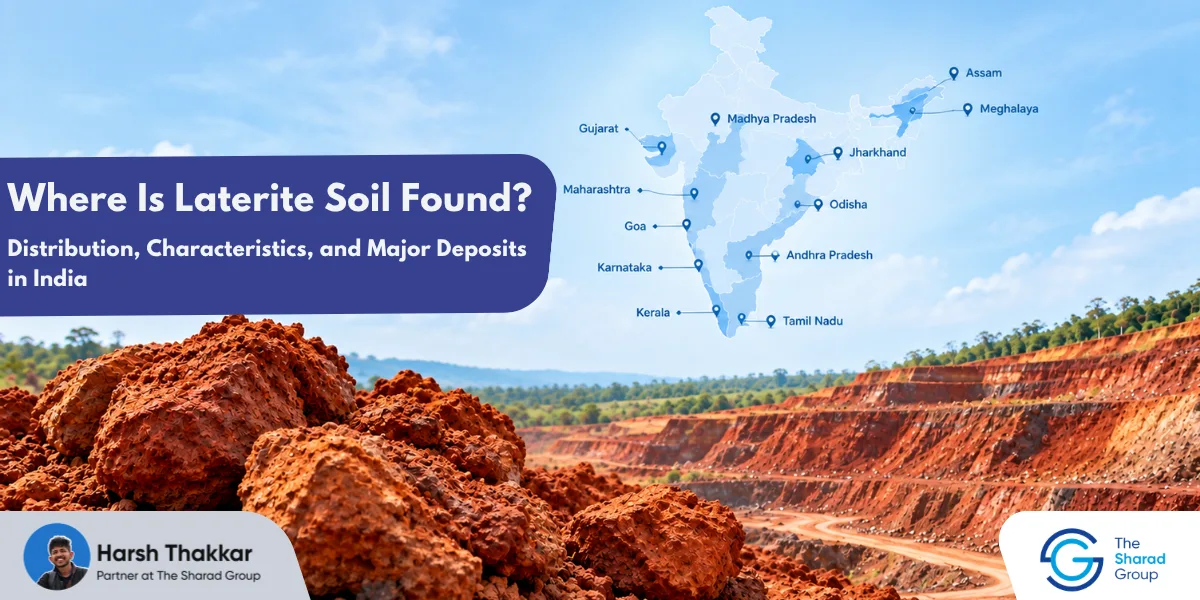
Laterite soil in India is very abundant, covering around 2,240,000 sq. km. of the country.
You are likely to find laterite soil in areas with high rainfall and warm temperatures. Such regions include:
- Maharashtra
- Gujarat
- Goa
- Karnataka
- Kerala
- Odisha
- Andhra Pradesh
- Meghalaya and Assam
Main Uses of Laterite Soil

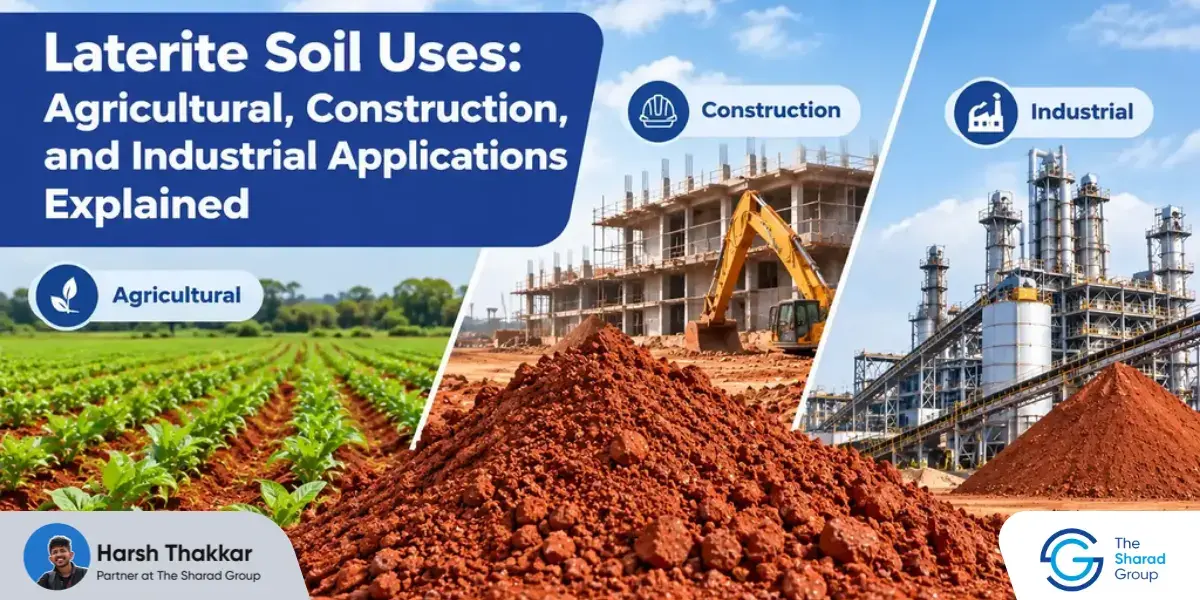
Here are the major uses of laterite soil, spanning from construction to agriculture.
- Construction and Building Materials
The most prominent use of red laterite soil is in the construction industry. It is a building material that has been used for over 1000 years.
One such example is the magnificent Angkor Wat temple in Cambodia.
So why is laterite soil so popular for making bricks? It is because laterite can be cut into regular blocks using only a spade. When exposed to air, it slowly hardens into a durable building stone.
Such laterite bricks are:
- Cheaper than traditional fired clay bricks
- Naturally insulating for cooler interiors
- More environmentally friendly
- Better durability and reliability
- Road Construction
When hardened, laterite bricks also make excellent base material for roads.
This was demonstrated in the 1970s, when countries such as Kenya and Malawi used laterite to build paved roads. Using them at the base instead of stones, the roasts performed excellently.
- Agriculture and Plantation Crops
Laterite soil is known to be excellent for managing certain crops. While it is naturally low in fertility, laterite soil is well known for its use in agriculture.
Why? Because the uses of laterite soil are great for growing crops like:
- Tea, coffee, rubber, and cashew nuts
- Pineapples
- Pepper and cardamom
- Tapioca and cotton (with the right fertilizers)
- Industrial Applications
Modern research has discovered even more uses of laterite soil. These include:
- Water Filtration: Useful for removing upto 98% arsenic from polluted water
- Cement Production: Laterite is used to add iron and aluminum to the cement mix
- Geopolymer binders: Used to make sustainable bricks by blending with fly ash
- Mining: Laterite soils are very important sources of bauxite and iron ore
Red Laterite Soil vs. Other Indian Soils
Let us compare the uses of red laterite soil with other types of clay and major soil types in India.
| Soil Type | Color | Fertility | Primary Uses |
| Laterite Soil | Rusty-red | Low | Plantation crops, construction |
| Black Cotton Soil | Dark black | High | Cotton, sugarcane |
| Alluvial Soil | Light brown | High | Wheat, rice, and vegetables |
| Red Sandy Soil | Red | Low | Millets, groundnuts |
Conclusion
Using laterite soil in India for construction and agriculture is an age-old tradition. It is truly a remarkable natural resource made by millions of years of weathering.
What laterite soil provides is the unique ability to transform from soft, cuttable earth into hard rocks. This has made them a staple in modern construction that requires sustainability. Alongside this, laterite soil is also beneficial in tea plantations and water treatment.
Before you enjoy the benefits of laterite soil, you need the right supplier.
For your needs, I recommend contacting The Sharad Group. They are best known as a premier supplier of industrial minerals like kaolin, silica sand, and laterite clay. The company has an incredible international reputation in the soil and mineral supplying industry.
Want a supplier that values consistency and reliability? Consider providing your project needs to The Sharad Group. Their team will consult with you and provide exactly the laterite quality you requested.
Excited to capitalize on the various uses of laterite clay in India? Contact the experts at The Sharad Group today and receive a free consultation!
FAQs
1. What is laterite soil, and where is it found in India?
Laterite soil is a red, iron-rich soil formed by tropical weathering. In India, laterite soil is found extensively across the Western Ghats and in parts of Odisha, Andhra Pradesh, Karnataka, Kerala, and the northeastern states, including Meghalaya and Assam.
2. What is the composition of laterite soil?
The laterite soil composition typically includes 30-50% iron oxide, 20-30% aluminum oxide, and smaller amounts of silica and titanium oxide. This unique laterite soil composition gives it its characteristic red color and hardens when exposed to air.
3. What are the main uses of laterite soil?
The uses of laterite soil include construction (as cut blocks for buildings), road base material, and agriculture for plantation crops like tea, coffee, rubber, and cashew nuts. Modern uses of laterite soil also include water filtration and cement production.
4. Why is laterite soil red in color?
Red laterite soil gets its distinctive color from high concentrations of iron oxide (essentially rust) within its composition. The iron oxidizes during weathering, creating the rich red hues seen across laterite landscapes.
5. Is laterite soil fertile for farming?
While naturally low in fertility due to leaching, laterite soil can be productive with proper management. It supports plantation crops such as tea, coffee, and rubber well, but requires organic manure and fertilizers for optimal yields.