What Are the Main Types of Pottery Clay?
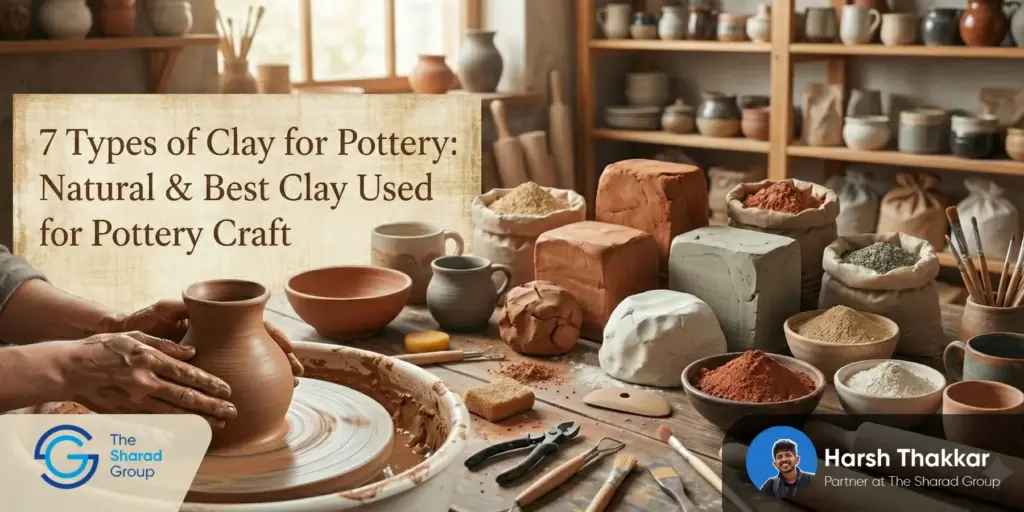
The 8 main types of clay used in pottery are: earthenware, stoneware, porcelain, ball clay, kaolin (china clay), fire clay, paper clay, and raku clay. Earthenware is best for beginners, stoneware is best for everyday tableware, and porcelain is best for fine ware. Each type differs in firing temperature, plasticity, color when fired, and ideal use.
Pottery Clay Types: Side-by-Side Comparison
| Clay Type | Firing Temp | Plasticity | Fired Color | Best For | Beginner? |
| Earthenware | 950–1100 °C | High | Red / Buff | Planters, terracotta, decor | ✓ Yes |
| Stoneware | 1200–1300 °C | Medium | Grey / Buff | Tableware, mugs, baking dishes | ✓ Yes |
| Porcelain | 1260–1400 °C | Low | White / Translucent | Fine ware, sculptures, tea sets | ✗ Advanced |
| Ball Clay | 1670–1760 °C | Very High | Off-white / Buff | Blended with other clays | — Additive |
| Kaolin (China Clay) | 1750–1800 °C | Low | Pure white | Porcelain, paper, cosmetics | — Additive |
| Fire Clay | 1500–1750 °C | Variable | Buff / Brown | Kiln furniture, refractories | ✗ Specialist |
| Paper Clay | Same as base clay | Very High | Same as base clay | Tall builds, repairs, delicate forms | ✓ Yes |
| Raku Clay | 900–1000 °C | Medium | Variable / Crackled | Raku firing, decorative pots | ✗ Specialist |
What's on this page:
TogglePlanning to get into pottery, but confused about which clay to use?
Trust me, I get it. With so many options available, choosing the right clay can be tough.
This is why I have listed the seven most popular clay types below.
Each clay type includes a detailed list of benefits and why it is so popular among pottery enthusiasts.
Using this list, you can identify the best clay for your final craft’s design.
Ready to choose your perfect clay type? Let’s go!
Quick Comparison
Only need to know the basics to make your choice?
Here is a quick look at the most commonly used clay types:
| TYPE OF CLAY | KEY CHARACTERISTICS | BEST FOR |
| Earthenware | Soft and porous. Needs glaze to hold water. | Beginners, hand-building, decorative items |
| Stoneware | Strong, durable, and waterproof after firing. | Dinnerware, mugs, functional pottery |
| Porcelain | Smooth, fine, and very strong. Can be translucent. | Fine china, jewellery, delicate art |
| Ball Clay | Very flexible and sticky. Adds strength to other clays. | Mixing with other clays to improve workability |
| Fire Clay | Handles very high temperatures without melting. | Kiln shelves, industrial linings |
| Kaolin | Also called China Clay. Pure and white-firing. | The main ingredient in porcelain |
| Paper Clay | Made with paper pulp. Lightweight and very strong when dry. | Large sculptures, repairing work |
If you want a broader classification beyond pottery use, this guide to types of clay is useful for comparing industrial and craft-focused clay categories.
8 Types of Clay for Pottery: A Simple Guide
I hope you are clear about the basic differences between these clay types. Now, let’s dive deeper.
Exploring each type in detail will help you understand its unique benefits.
It will also help you choose the right clay type for your specific use case.
Here we go!
- Earthenware: The Best Clay for Beginners
Are you a beginner just starting in pottery crafting? I recommend using Earthenware clay for your craft.
Also known as ‘terracotta’, this is one of the oldest forms of clay available today.
It is known amongst the pottery community as being the easiest clay to work with.
Earthenware clay also fires at a low temperature. This will make firing your pottery more cost-effective and easier.
But note that Earthenware is also porous and can easily absorb water like a sponge. I recommend applying a glaze to your earthenware to avoid any leaks.
Unsure what a glaze is? It is a coating you apply to pottery to make it stronger and more durable. It also makes your pottery waterproof and better for daily use.
Best suited for:
- Hand-made pottery crafting.
- Making tiles and decorative plates.
- Sculpting simple figures and ornaments.
- Easy-to-make pottery projects.
- Stoneware: The Strongest Clay for Daily Use
Planning to make a mug or a plate for daily use out of clay?
I recommend using stoneware clay rather than earthenware to make your craft more durable.
Stoneware is one of the strongest clay types you can use for pottery. It has a tough texture that results in durable clay products.
Also, through the process of vitrification, stoneware develops a hardened glass-like texture. This will help your pottery craft become waterproof and strong after firing.
I also recommend glazing your fired stoneware pottery to make it food-safe and more resistant to daily usage.
Keep in mind that working with stoneware can be a lot trickier than earthenware.
So if you are a beginner, start with earthenware and work your way up to stoneware.
Best For:
- Dinner plates, mugs, and bowls.
- Baking dishes and food casseroles.
- Durable flower vases and planters.
- Functional items that get regular use.
- Porcelain: The Elegant Fine Clay
Going for the whole creative aesthetic appeal? Consider using porcelain for your designer pottery crafting.
This type of clay is popular for its beauty and delicate nature. With its sleek shine and white transparent texture, porcelain is rightfully called “the queen of clays”.
But be aware, working with porcelain is exceptionally challenging.
This is mainly because porcelain clay has very low plasticity. It can easily crack while you are moulding it.
Therefore, if you plan to work with porcelain for your crafting, you will require a lot of patience and a delicate hand.
The real beauty of porcelain is actually seen after it is fired. Intense heat brings out porcelain’s pure white color and helps it develop its signature smooth texture.
Firing also makes porcelain hard and strong. But its walls remain thin enough for light to shine through them. This translucency is one of porcelain’s best features.
It is also naturally white, making it a perfect canvas for additional colour glazes. Any colour that you will add to porcelain after firing will look bright and vibrant on its surface.
Best For:
- Fine china and tea sets.
- Delicate jewellery and beads.
- Art pieces and beautiful sculptures.
- Ball Clay: The Secret Helper Clay
Think of ball clay as your go-to super-ingredient. Since it is incredibly plastic, it easily sticks to other clays. Moreover, this also makes it very flexible.
You will rarely use Ball Clay alone to make pottery products. It is actually used mainly to improve other clay types.
Using Ball Clay, you can make your other primary clay types more flexible. Another Ball Clay use is to prevent cracking of your pottery craft as it dries.
Mixing Ball Clay also offers your primary clay with what potters call “green strength”. This helps your mixed clay craft hold its shape better before firing.
One thing to keep in mind is that Ball Clay can look very dark when it is wet. But when it fires, it develops a very light colour. So don’t worry about ball clay making your final pottery craft dark; it will fade once you fire the piece.
Best For:
- Mixing with stoneware to improve overall workability.
- Making fragile clay types like Porcelain less fragile.
- Helping raw clay forms hold their shape.
- Fire Clay: The Heat-Resistant Clay
Fire clay is a specialised type of natural clay for pottery, designed to withstand extreme heat.
How does it work? It mainly has to do with Fire Clay’s high alumina content.
This makes it highly heat-resistant, providing strong protection against high temperatures.
You can even use Fire Clay to make shelves and posts for your kiln.
Also, because of its low plasticity and grittiness, you can use it to hold your pottery while firing.
Fire Clay is mainly used in industrial settings to make furnaces and lining fireplaces for added heat resistance.
Best For:
- Making kiln furniture (shelves, posts, etc.)
- Industrial liners and bricks
- Specialised high-temperature applications.
- Lining fireplaces for added heat-resistance.
- Kaolin (China Clay): The Pure White Clay
Kaolin is considered to be the purest form of clay. It is the central ingredient found in porcelain.
Also known as “China Clay”, Kaolin is rarely used on its own in pottery.
I usually mix it with another type, like ball clay, to make a strong composite that fires to a white color.
Need a pro tip? Make sure you partner with a reliable kaolin clay manufacturer in India to obtain the highest-quality kaolin clay for your project.
The purer your Kaolin is, the stronger and whiter your pottery craft will become.
Best For:
- Making white-colored clay crafts.
- Used for coating paper and cosmetics.
- Adding white color highlights to your craft.
- Paper Clay: The Strong and Light Clay
This is the most modern type of clay on this list.
You can make Paper Clay by adding paper pulp to any existing clay body. The addition of paper to the mix creates a new type of clay with very unique properties.
It makes the clay incredibly strong and leather-hard. This enables you to build strong structures that are both taller and thinner than those of other possible forms. They will also be less likely to collapse.
Another great feature of paper clay is its weight. It allows you to make large sculptures and wall pieces that are much lighter than those made with regular clay.
Paper clay also dries quickly and more evenly. It reduces the chances of cracks forming and provides an excellent option for solving many common pottery problems.
Best For:
- Crafting tall and thin clay artworks.
- Making delicate forms like leaves or wings.
- Repairing cracks in dry clay pieces.
- Experimental and advanced clay artworks.
8. Raku Clay: For Bold Decorative Pottery
Best For:
- Decorative pottery
- Tea bowls
- Artistic ceramic pieces
- Crackle glaze effects
- Garden décor
Find Your Perfect Clay
Making the right choice between different types of clay can make all the difference in your pottery.
Whether you choose stoneware or fine porcelain for your crafting, your final clay type will determine your result.
But knowing the right type of clay is only half the battle.
You also need a reliable supplier of high-quality clay for your crafting needs.
This is where a reputable brand like The Sharad Group comes in.
With over 30 years of industry experience, we excel at providing reliable materials to both pottery artists and beginners.
Are you ready to turn your imagination into clay? Contact us today and find the perfect clay type for your needs.
FAQs
1. What is the best clay for beginners in pottery?
Earthenware is the best clay for beginners. It’s soft, easy to shape, and very forgiving. It’s perfect for hand-building your first pots, sculptures, or tiles.
2. Which clay is best for making mugs and dinnerware?
Stoneware is the best choice for mugs and dinnerware. It’s strong, durable, and becomes waterproof when fired, making it safe for daily use and dishwashers.
3. What type of clay is used for pottery on a wheel?
Stoneware is the most popular clay for wheel throwing. Its balance of stiffness and flexibility makes it ideal. Many potters also use porcelain for a finer finish, though it can be trickier for beginners.
4. What is the difference between natural clay and processed clay?
Natural clay is dug directly from the ground and may contain rocks and impurities. Processed clay (like most you buy in bags) is cleaned, mixed for consistency, and ready to use. For most potters, processed clay is easier and more reliable.
5. Can you use any clay soil for pottery?
Not exactly. While you can find natural clay soil deposits, they often contain sand, rocks, and organic matter that can cause pots to crack or explode in the kiln. It’s best to use clay that has been prepared and sold specifically for pottery.